










Ernst & Young LLP, a global accounting and professional services firm, announced April 29 that Buckhead resident David Millican, the found…


1-800-TruckWreck, powered by Witherite Law Group, recently partnered with Walmart to host a pop-up shop for graduating seniors who applied for…


The MARTA Airport Station Project is ahead of schedule, with construction crews making progress on the renovation of the concourse and platfor…


In a development for local education, the Fulton County School system has unveiled its general fund budget recommendation for fiscal year 2025.
Trending


At least for the time being, Comcast cable customers will have to find a different way to watch the Atlanta Braves.




Rreal Tacos, an Atlanta-based Mexican street food restaurant, has opened its seventh location in Buckhead.


A black bear was struck and killed by a car on GA. 400 in Sandy Springs April 30, following a series of bear sightings earlier in the evening.


Trending Now
-
9 South Carolina Counties Are Expected to See Brood XIX Cicadas This Year
-
74 Missouri Counties Are Expected to See Brood XIX Cicadas This Year
-
These Indiana Counties Will Be Affected By Brood XIII Cicadas This Year
-
Sandy Springs Police Track Down, Arrest Man Accused of Kidnapping
-
Falah Farms Brings Agriculture and Education to the Community of South Fulton
2024 Election










3540 Woodhaven Road has 11 bedrooms, 13 full and 7 half bathrooms and is on the market for $35,000,000 Click here for all the photos.ON THE MARKET: A Tuxedo Park Masterpiece in the Heart of Buckhead
On The Market:

News




After four years and six locations, Solidarity Sandy Springs has found a new home — one that, board members say, is permanent.








Hamilton E. Holmes Elementary School recently hosted an educational event, the Blacks in Wax Museum, showcasing African American leaders.


The Georgia Institute of Technology created Georgia State University.


The Pace Academy girls’ lacrosse team achieved a breakthrough season in 2023 with its first …


The Hapeville Department of Economic Development hosted a Touch-A-Truck Event on Thursday, A…


Local nonprofit organization, Jordan’s Voice celebrated Autism Acceptness Month by taking it…

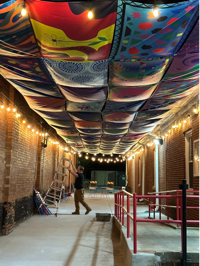
Alleywave is set to return to Downtown Fairburn for a second project, thanks to Art in the A…